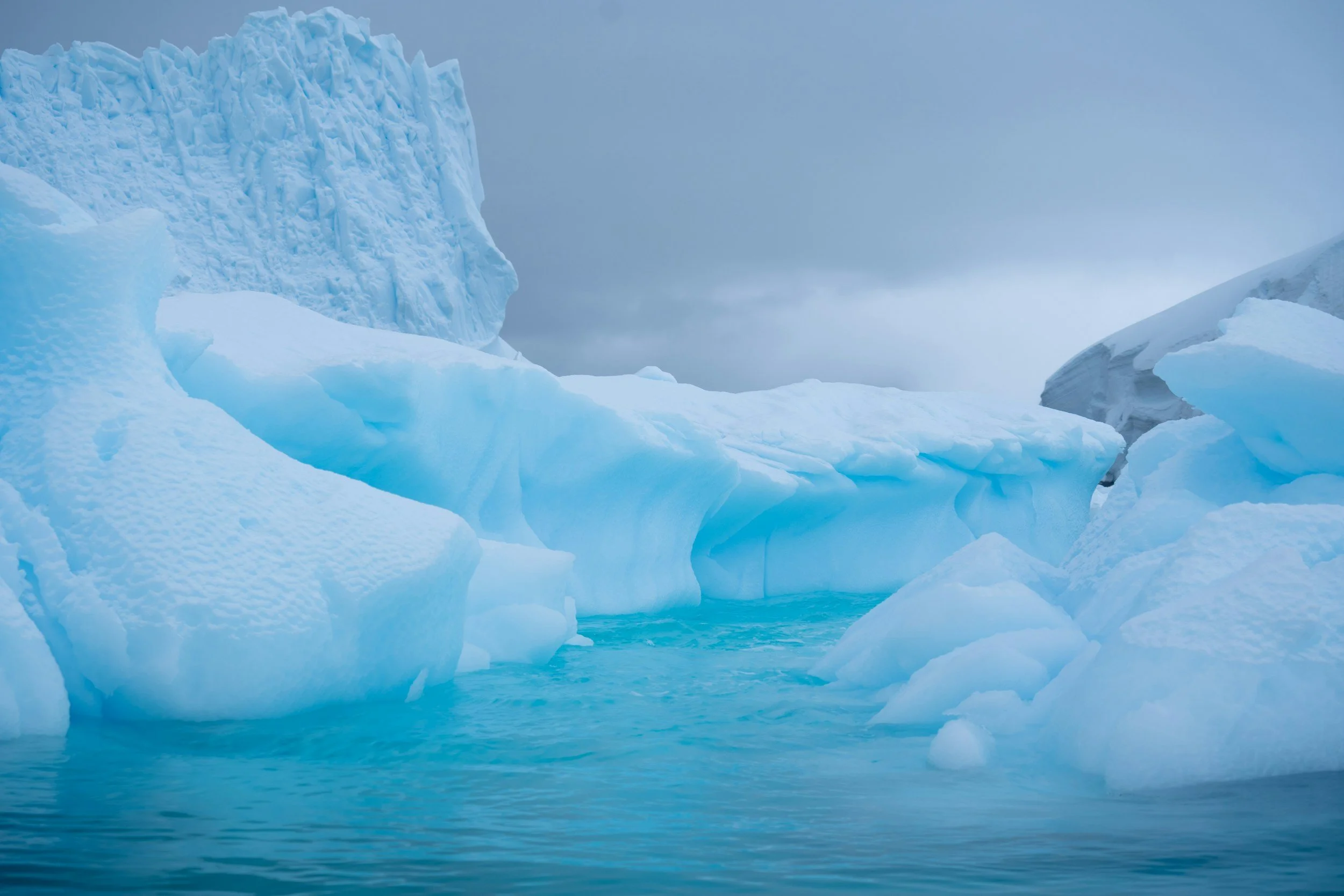


Episode Descritption:
What is the Ocean Twilight Zone? Explore the mesopelagic (200–1000 m) and why it’s central to climate, fisheries, and biodiversity. Ocean Conservancy’s Chris Dorsett explains daily vertical migrations, lanternfish and vampire squid, and the biological carbon pump that shuttles carbon to the deep. We unpack emerging pressures—industrial harvest for fishmeal/fish oil, deep-sea mining plumes, and marine carbon-removal trials—and how science-based policy can safeguard this ecosystem before impacts stack up. Clear, accessible ocean science plus practical context on precautionary management make this a go-to primer for anyone curious about how mid-water life supports whales, tunas, and the health of our seas.
Credits:
- Support our science communication by joining us on Patreon or sending us a gift on PayPal
- Episode Guest: Chris Dorsett
- Learn more about Chris Dorsett and Ocean Conservency here
- Read Motion 035
- Follow the IUCN World Conference and find the full list of motions here
- Follow Ocean Conservancy on Instagram , Blue Sky, LinkedIn
- Episode Transcript and more information on the Pine Forest Media website
- Follow Pine Forest Media on Instagram @pineforestmedia
- Hosted, produced, and edited by Clark Marchese
- Cover art by Jomiro Eming
- Theme music by Nela Ruiz
- Find some more Pine Forest Media podcasts below:
- Listen to South Pole on Spotify or Apple Podcasts
- Listen to Plastic Podcast on Spotify or Apple Podcasts
- Listen to Something in the Water on Spotify or Apple Podcasts
Transcript
Clark Marchese (00:11.662)
Hello there, and welcome back to another episode of Oceanography, the podcast that dives deep into the science of our oceans, the latest in marine research, and the scientists working hard to better understand and protect our blue planet. Today, we are traveling through another dimension. Our next stop, the ocean twilight zone.
Clark Marchese (00:49.562)
All right. Hello, Oceanography listeners. Thank you so much for being here today on the Oceanography podcast. Today, it's Thursday, which is strange. I know. And it's the second Thursday in a row that we've had a special episode, but there is something special going on and we need to talk about it today. If you're listening to this on October 9th, 2025, the day that this is released,
Thousands of environmental organizations and advocacy groups from around the world are convening in Abu Dhabi for the World Conservation Congress of the International Union for the Conservation of Nature. It's a pretty big deal. This event only happens once every four years. And we've covered a couple of conferences on the show so far and discussed the power they have in agenda setting and defining conversations about our environment and the directions we need to go in.
So this is another policy episode, but it is in fact quite science heavy also, which we'll get to in just a second. But whenever we're discussing climate and conservation and the environment, because of the discourse setting that happens at events like this, oceans are more and more a part of the conversation each time, which I think appropriately reflects our growing understanding of their importance to our shared future. And it is no different in Abu Dhabi this week. Today we are speaking with Chris Dorsett. the Vice President of Conservation at Ocean Conservancy, about a specific piece of science-based ocean policy that is going to be voted on at this very conference, Motion 035. Maybe a little bit of context about what motions are in this scenario. Chris Dorsett will provide a bit more background about the event itself, but the parties involved will be voting on a handful of objectives called motions that advance certain environmental stewardship goals. Now there are over a hundred that they will need to get through, so they're going to be having a very busy week. But for example, Motion 001 is about improving tree planting practices. Planting the right tree in the right place and for the right purpose. Motion 017 is for the protection of glaciers and post-glacial ecosystems. Motion 058 is addressing wildlife tracking and the management of seized or confiscated live wild animals. So as you can see,
Clark Marchese (03:08.64)
Lots of interesting topics are being discussed, but the one we are going to discuss today is Motion 035, the protection of Mesopelagic ecosystem integrity. Now we are going to learn what Mesopelagic means, and you may have also seen from the title of the episode, this part of the ocean is also sometimes called the ocean twilight zone. Spooky. We will learn why that is as well. But this motion that we'll be speaking about today is put forth by Ocean Conservancy and partners. And that's who's here to talk to us about the policy itself and the science behind it. And quickly, for those who haven't heard of Ocean Conservancy, it is an organization that has been around for quite a long time. For over 50 years, they've been advocating for the ocean by connecting the dots between scientific research, policy change, and grassroots action. And speaking with us is their vice president of conservation, Chris Dorsett, who has been at Ocean Conservancy for over 20 years and has particular expertise in fisheries management and ocean policy. Today, he's going to be teaching us a bunch about the ocean twilight zone. This cross section of the sea makes up only about 20 % of the ocean's volume, but it holds over 90 % of the biomass, meaning the net weight of all the critters added up on the same scale. So it's a biodiversity hotspot, of course, and the things that happen in this zone have really significant implications for our climate systems and overall ocean health. Chris is going to give us more detail on that shortly. And as you may have guessed, like many aspects of our ocean, the Twilight Zone is facing a handful of concrete and complex threats that Chris will also outline for us, as well as how Motion 035 can address them. And as we always do, we'll get to know a little bit more about Chris the person too. Clearly, we have a lot to cover today, so I'll play the interview now, but just before we do, If you think that what we're talking about in this episode is important and you want to support the science communication work that we do here at Pine Forest Media, one of the easiest things you can do to help us is to share this episode with someone you know. It's also a great way to keep these conversations about oceans going. You can say, hey, I heard about this international conservation conference and I found this resource to learn a little bit more about what's going on there. This kind of thing not only helps us keep doing the kind of work that we do, but it also helps the mission behind this work.
Clark Marchese (05:24.802)
which is to share accessible ocean science as far as we can. Thanks a bunch to all of you who are supporting us just by listening today. I will stop rambling now and it's time to hear from Chris.
Clark Marchese (05:48.482)
Okay, so we are recording. First of all, welcome, Chris. Thank you so much for taking the time to speak with us today. I'm very glad to have you here. One question I always like to ask at the top of the show to kind of get to know who we're speaking with is if you could just introduce yourself and tell us a little bit about your history with ocean conservation and how it led you to your current position now at Ocean Conservancy.
Chris Dorsett
Yeah. So first off, Clark, thank you so much for having me. It's a pleasure to be here with you. So I started out as an aspiring marine biologist in school. I really took an interest in the science policy interface. Like how does science, how is it used in terms of natural resource policymaking? I then went to law school and then knew from there that I really wanted to be in the public interest sector. And so was fortunate enough to get a first job working on fisheries policy in the Gulf, a focus on sustainability of US fisheries. At the time, new laws had just been passed that really increased ambition with regards to a conservation in that space, including ending overfishing and protecting important habitats, as well as reducing incidental catch of non-target species in fisheries, otherwise known as bycatch. I spent many years kind of working with scientists, decision makers, and the fishing industry on those changes.
Clark Marchese
Okay, great. I'm hearing some callbacks to a couple of previous episodes. Science policy interface is one of those vocabulary words we have in our back pocket now, how science informs policy. And your career has applied it to some topics we've already covered as well. Our first episode, in fact, was about designing tech to reduce bycatch, how to save the whales, like actually. So I'm glad to follow these threads.
Chris Dorsett (07:36.884)
In 2010, life changed for those of us living on the Gulf Coast with BP oil spill. And so I really shifted my attention there, keeping of course, the impacts on fisheries were real. And so it was still a big part of the work we did, but we really wanted to make sure that the Gulf was made whole from the impacts of the BP oil spill. And from there, my position grew to where I kind of took on additional responsibility. And now I have the privilege and pleasure of working with great teams at Ocean Conservancy.
Clark Marchese
Okay, thank you for sharing. Listening to your journey and pathway and about the oil spill being a pivotal moment in your career, makes sense that you've had such a focus on conservation. Maybe a quick aside about the oil spill. I know it's not the topic of the day, but it's worth taking just a minute to debrief. We can do an episode on offshore drilling or the consequences of oil spills at some point, but quickly, as you mentioned, it happened back in 2010 in the Gulf of Mexico. It is considered to have been the largest spill in the petrochemical industry's history. It was really bad. If you Google it, you may see some pretty upsetting images. Truly, it was an ecological disaster. And if you're like me and you thought an oil spill meant that maybe there were some oil and some barrels on a boat that spilled off the side, it's way worse than that. Basically, they drill a well of sorts and stick a pipe between the deep oil deposits underground and That system failed, so the oil from the ground was free-flowing up into the sea. And if you can try and picture what that would look like visually, you can understand how hard it would be to contain. It took them nearly three months to stop the flow, and estimates have it at over 200 million gallons of discharge. I don't want to spend any more time on it today, but we will come back to it. I do think it's worth mentioning that though, because we are talking about policy today.
Clark Marchese (09:30.35)
So I hope that this example serves to show how important it is to have science-backed policy to protect the ocean, because these are the types of things that can happen and have happened. Anyways, bringing it back to you, Chris, another question I like to ask the experts on this show is how they got interested in the ocean in the first place. It seems like this oil spill was a pivotal moment as your career had developed, but you mentioned some earlier school days and dreams of being a marine biologist. Can you speak to what prompted that?
Chris Dorsett
Yeah, so, both sides of my family lived close to the coast, relatives in New York, as well as on the Texas coast. And so my life was filled going to the beach, going fishing. And in particular with my Texas relatives, a lot of great, fish fries and such. They were, they lived in coastal communities, counted folks in the fishing industry amongst their friends. so. It was instilled in me at a very early age, a kind of a love for the ocean and natural resources. I was also fortunate in living the first few years of my life in New York and then outside of Washington, D.C., access to great museums. And I still count the Museum of Natural History in New York as a pretty significant part of what led me in this direction. For folks who have been there, the very large blue whale, which when I was a kid, I was afraid that thing was going to fall on me. But that ocean hall was just really amazing and had a diversity of species around the globe that really piqued an interest in the all-on wonder of the ocean.
Clark Marchese
Okay, see I'm glad I asked because now I can see how your connection to the fishing communities also led you towards this locally focused and the impact driven aspects of your work. I also relate to the museum thing. For me it was the Seattle Aquarium. Now the other thing you mentioned is that you are interested in the science policy interface and we're going to be talking about both the science and the policy today and how they merge in the context of one very important ecosystem, the Ocean Twilight Zone. We'll start with the science side of it to set the stage.
Clark Marchese (11:29.89)
We're going to be learning all about the ocean twilight zone. This was a new term for me. So first of all, can you tell us what the ocean twilight zone is? Why is it called that? And I also understand it to be a nickname for Mesopelagic. So if we can also break down that word as well, it would be super helpful.
Chris Dorsett
Yeah, absolutely. So the Mesopelagic zone is the technical term for it and it comes from the Greek word for middle. So it's an area of the ocean that's between 200 and 1000 meters deep or 600 to 3000 feet deep. The pelagic part is you can think of it as open water, so it doesn't have the traditional habitat features we might associate parts of the ocean with, like the sea floor or coral reefs or those kinds of things. It's an area of the ocean where light begins to fade out, hence the name Twilight Zone, which I really love. I think it's really catchy, kind of conjures up images of the supernatural, which is well-deserved, given some of the species that live down there. It's also... By our standards, a really harsh place. High pressure, it is cold, again, low lights, but really amazing to me the diversity and abundance of species that were able to adapt to this pretty inhospitable environment.
Clark Marchese
Okay, so it's a cross section of the ocean where the light starts to fade. If I'm thinking back to science class, I'm imagining the different layers of the ocean. I could put a diagram on our website since we only can listen at this moment, but can you help us place it in the context of the water column?
Chris Dorsett (13:06.294)
The upper water column or the epipelagic layer is I think what most people are familiar with. It's kind of home to things like whales and dolphins and number of fish species that we find on our plates. So it is the layer right below that. And then you get into some deeper layers of the ocean all the way down to the abyssal plain in some parts, which is much deeper than the mesopelagic zone. So you can think of it as kind of roughly upper middle in the water column.
Clark Marchese
Okay, we'll have to do an episode on the abyssal plane sometime too. And I also heard you describe it as supernatural. The term itself is quite good ocean branding. I've heard it described as mysterious or even otherworldly, but you mentioned it was right below the layer where the more familiar fish would live. So if it's hard to imagine what a more mysterious looking fish might look like, can you paint a picture of types of species that are down there that led to this nickname.
Chris Dorsett
Yeah, absolutely. Given the conditions that exist, these animals have adapted to those conditions. So some of the things you see are species that can produce their own sources of light known as bioluminescence. So the lanternfish are one of the most common species that people might think of when they think of the mesopelagic zone. They're a small fish. They use the light for communication as well as ways to camouflage themselves from predators. Also, large eyes are pretty common in this area. So the telescope fish is a really fascinating species that it looks like it has a pair of binoculars on its head. The viper fish, these have very large teeth and jaws. They can eat things as large as themselves. They also, if people remember from Finding Nemo, when they get down to where that hang of they see the light and then all of sudden there's this big fish that's a
Chris Dorsett (15:03.694)
using that to attract prey. That's one of the things that the viperfish does. And then one really fascinating animal is the vampire squid. That's not a squid. It doesn't suck blood. It's a cross between a squid and an octopus. It has this cape, which I'm guessing is like at the name of a vampire squid. It also uses bioluminescence and interestingly, it doesn't prey on other species. It feeds on what's known as marine snow, which is all the detritus that is coming down from the upper layer of the water column, then that's how it is able to sustain itself.
Clark Marchese
Alright, this is officially our de facto Halloween episode. Great timing for October with the vampire squids and the viperfish. I will have to do a quick Google image right after this as well.
Chris Dorsett
It's worth it, trust me.
Clark Marchese
Okay, I'm excited. And also, I guess with all these different species, you know, we're talking about biodiversity. And when I was preparing for this episode, I read something that stated that the Twilight Zone holds up to 95 % of all the fish biomass on the planet. That's a pretty significant chunk. Can you speak to that significance?
Clark Marchese (16:09.9)
What is the importance of having such a high percentage of biomass concentrated in one area?
Chris Dorsett
Yeah, this was something that really blew me away. as I mentioned, I mean, I've spent most of my life in the fishery space. And when I heard about the, you know, where the bulk of the fish biomass on the planet exists, I was like, really? You know, that, that part of the ocean, it's not, it's only 20 % of the ocean by volume. So having by some estimates upwards of 90 % of the fish biomass on the planet is, is really just incredible. So the amount of biomass that exists in this area is important for, think, two key reasons. One is we get continuing scientific evidence from studies of species that we care about in the upper water column, like dolphins, whales, sharks, important. species like tunas. We're learning more and more about how much they're able to dive this deep in the ocean and feed on these mesopelagic species because there's just so many fish down there. So it's really an important part of the ocean food web and it sustains many animals that live in the upper layers of the water column. So the other really important factor is that many of these fish species are part of the largest migration of animals on the planet and it happens every day. So at night, because as I mentioned, a lot of these species are very small, they move up into the upper water column to feed because it's safer there. Other species are asleep, so they don't have to worry so much about being eaten. But when
Chris Dorsett (17:44.322)
daylight comes, they move back down in the depths of the ocean for safety. And when they do this, they essentially they're eating organic material up in the upper water column. And then they're bringing that back down to the mesopelagic zone. When they do things like poop, that then falls down to the bottom of the ocean and it effectively sequesters carbon to the tune of two to six gigatons annually. So you might wonder, well, how much is that exactly? So what it's equivalent to is two times the emissions from cars globally. So you can imagine if we had that much more in terms of emissions that were happening, we'd be in even bigger trouble than we are from a climate regulation vantage point.
Clark Marchese
Yeah, okay, so it's pretty significant. And also listeners might be familiar with the concept you've just described of the biological carbon pump, sort of how carbon moves through the depths of the ocean and gets stored or sequestered in different ways. And the two times the emission from all cars, I think that comparison makes it pretty starkly clear how important it is that these ecological systems are functioning and healthy. And one of the reasons we are reminding ourselves of the importance of this ecosystem Aside from how fascinating it is, I understand that the Ocean Twilight Zone is also facing a handful of threats and pressures. I wonder if you can outline some of them for us and speak a bit to the impact that they present.
Chris Dorsett
Yeah, and I'll note that many of these are emerging threats, which is good news in terms of having time to actually establish the right set of standards to ensure that the important services that the mesopelagic zone provides to our planet are preserved for the sake of humanity and health of the ocean. But you mentioned fishing, that up to 90 % of the fish, vilemouths on the planet, as you might suspect, attracts attention.
Chris Dorsett (19:42.312)
of fishing interests in ways that they can increase the sources of marine based proteins. You're not going to find lantern fish on your plate anytime soon, rather what the interest is in using them as sources of fish meal and fish oil. So folks might be familiar with the fish oil pills you see at the grocery store or drugstore as a nutrient supplement. So There are some species that are high in omega-3s as well as, again, they can be ground up into the fish meal. So there have been exploratory fisheries over time. It's not economically viable right now, but work continues to advance technologies to make it economically viable. The other big one is there's been a lot more interest in deep sea mining and even some proposals to begin mining parts of the ocean. These, the sediment plumes, so there's going to be these plumes of sediment that are created in the mining process and you'll have heavy metals like copper that are released and what that ultimately will do to the mesopelagic zone, we think is something we need to be concerned about when we think about this emerging use of the ocean. And then the other thing I will note is marine carbon dioxide removal. So it's a manmade way of reducing carbon that issue here is that we don't know what impacts that will have when done at scale on the ocean's natural biological carbon pump. And so this is an area where we really need to understand and research these techniques before they're adopted at scale.
Clark Marchese (21:27.47)
Okay, so there's definitely a handful of threats on that list. Maybe we can take them one at a time. I'll quickly address carbon dioxide removal. So for listeners, we're not going to be talking about it much today at all. I just learned about it myself in the context of the ocean, but of course, carbon dioxide and other greenhouse gases are causing our planet to warm, and there are really ingenious and solutions-oriented people who are exploring the possibility of taking carbon out of the environment. somehow. I don't know how. One thing I do know is that it's quite contentious, even among scientists and marine conservationists. Again, I don't know how it works or exactly why it's controversial, but I am going to find out. I'm going to make an episode all about it and share it with you guys. Just not today. So maybe we can move on to fishing, which is your background. You mentioned the lanternfish. Can you tell me a little bit more about it? Perhaps what its ecosystem function is? and how targeting this particular species for industrial fishing might impact the Twilight Zone at large.
Chris Dorsett
Yeah, the lanternfishes and the bristle mouse are two of the most abundant vertebrates on planet earth. Lanternfish, it's a lot of biomass in the mesopelagic zone. And so this is one we're particularly concerned about. being targeted by the fishy industry. also, as I mentioned, some species being high in omega-3s and a good source of proteins. There's been a lot of work done on lantern fish to look at their nutritional profile and what the yields can be. And it is seen as something that would be suitable to fish, especially as, again, people are looking for new sources of marine-based proteins. But also we know that changing ocean conditions from
Chris Dorsett (23:12.792)
from climate change as well as historic fishing pressures are stressing those species like anchoveta that are current sources of fish meal and fish oil. So this is why this one is very much on our radar as one of the species that is threatened. I think it's one of those areas where we need a cautious, a precautionary approach of how we go about extracting these resources. But I will note one study, one recent study that looked at extracting large amounts of mesopelagic fish and its implications for tunas, which there are some species of tuna that get over 50 % of their diets from mesopelagic species. And that study found that in the Atlantic for albacore tuna, for every ton of mesopelagic fish that you remove from the system, you would decrease the biomass of albacore tuna by about So there's a correlation there in terms of what the impacts would be on species that are really important to many communities around the world and to fish consumers. So yeah, it's something where I think it's given the importance of the biological carbon pump. It's one of the things we need to make sure we understand what large scale extraction would do before we engage in it haphazardly.
Clark Marchese
Yeah, I think the precautionary principle also applies to the other threats that you had mentioned about mining and the toxic plumes that come from that, for example. I think we'll probably spend some time discussing the precautionary principle when we move to the policy section of the episode, but maybe as a last reflection on these threats, I think that you mentioned how interconnected they are. We've talked on the show before about cumulative impacts. So maybe if you could isolate just one threat, say the fishing industry, for example. that was particularly interested in this place, you know, they wanted to fish a bunch of lanternfish. Maybe the ecosystem could have a bit of flexibility to recover from that. But the flexibility shrinks with each additional threat. So it's harder for the ecosystem to bounce back from the impacts of fishing if it's also being faced with toxic sediment plumes. And then of course you add on climate change, which is not just one issue, but more of an umbrella of ocean impacts. Ocean temperatures are rising. This chemistry is changing.
Clark Marchese (25:28.234)
It's more acidic, changes in salinity, etc. So it's starting to make sense why it's so important that this area of the ocean is protected because all of these systems are stacked on top of one another in this one place. Maybe it's a good time, actually, to transition into how to protect the Ocean Twilight Zone then. So the day that this episode airs will be the first day of a pretty large environmental conference that Ocean Conservancy and other partners will be attending to advocate on behalf of the Ocean Twilight Zone, among other things. I want to ask about the kinds of policies that you will be advancing at this conference, but first, for anyone who's never heard of the IUCN, could you give us a little bit of context about this event and what it's all about?
Chris Dorsett
Yeah, think so. The event we'll be attending is the International Union for the Conservation for Nature or the IUCN is the acronym. Every four years they hold what's known as the World Conservation Congress. The IUCN itself has been around for 75 years. It's a membership based organization. It's pretty unique and it has government and non-governmental organizations that are part of it. It has 1400 member organizations and about 17,000 expert advisors from around the globe that are very influential in developing evidence and creating policies for the conservation of nature. So one of the things that's great about the World Conservation Congress is it A, brings together from people around the globe to highlight issues, build awareness, information exchange, but it's also where resolutions are adopted to focus on issues that need attention of decision makers from around the globe. And so that's a really critical part of what's going to be happening next week is the consideration of some key motions for conservation of nature.
Clark Marchese (27:21.966)
Okay, and it starts today, if you're listening on October 9th. We had an episode where we learned about the different ocean conferences that are connected to the United Nations system. Is this conference series in any way connected to the UN?
Chris Dorsett
Yeah, it is not, but the way the two are connected in my mind is I've heard too, and I think it's spot on that the IUCN process is like a kitchen or laboratory for working out policies or recommendations that ultimately make their way into those venues where decisions are made amongst countries with regards to those things affecting ocean health. So it's kind of a way you can bring new issues to the table and start to build consensus aroun governments and non-governmental organizations. you can, from that, can build on it within those UN regulatory bodies or advisory bodies.
Clark Marchese
Okay, and I think that the idea of the kitchen is a really helpful analogy. And there is a reason I'm asking this because, you know, when we had our episode about the United Nations Ocean Decade, they had just finished up an ocean conference that had taken place in France. And then if listeners are following environmental news, they'll know we just wrapped up with New York Climate Week. Now we're having the IUCN in Abu Dhabi. And then November, we'll be having the COP30 in Brazil. And all of these are organized under separate entities. But the discourse that's building throughout them is in line. And there's a benefit to having these separate entities all talking about this because each event brings its own profile of participant, right? So some of them are only state actors and very policy focused, while others can pull in say, investors or scientists or educators. And you get to carry some of these conversations into different rooms, and then you build on the momentum of it all as time goes on.
Clark Marchese (29:21.684)
and I'm enjoying tracing how these discourses are evolving. Anyways, you will be in Abu Dhabi for this event and you are advocating for the Ocean Twilight Zone. I understand there is a specific policy that you are advancing. Can you tell us about Motion 035?
Chris Dorsett
Yes. So motion 035 is focused on the integrity of the mesopelagic ecosystem. And so about a year ago, we and partners convened to get a briefing from some key scientific institutions, such as the Woods Hole Oceanographic Institution, who had run the process of wrapping up a five-year initiative known as the Ocean Twilight Zone. And it was to study this area of the ocean. It just so happened to coincide with similar efforts in Europe. so over the last 10 years, roughly, there's just been a lot more knowledge that's been generated about the importance of the mesopelagic zone. And so one thing we talked about is, all right, so how do we get that knowledge into the hands of decision makers? And one of the things we identified was really important is the passage of emotion at the IUCN focused on the integrity of the mesopelagic zone. So we will be focused on getting this motion passed and essentially kind of harkening back to our conversation about the precautionary principle. This is an opportunity we have to essentially put a precautionary pause in place until we know a lot more about what the adverse impacts and as you mentioned, cumulative adverse impacts of a number of activities would have on the health of Mesopelagic communities and the important ecosystem services that they provide. So in a nutshell, it's a precautionary pause that would be put into place while we understand more about the Mesopelagic zone. And we put some rules in place so we don't have unregulated fisheries develop and we're collecting information from fisheries to
Chris Dorsett (31:21.24)
help us make better management decisions.
Clark Marchese
For listeners, I will paste a link in the episode description so that you can read the motion for yourself if you're interested in doing that. I do have two follow-up questions to ask though. The precautionary principle, as you mentioned, applies to the fishing industry and other activities. The wording of the text mentions, quote, other activities. It's possible we touched on them already because we ran through the threats, but I want to ask very explicitly what all would be halted while we search for more information about this part of the ocean.
Chris Dorsett
Yeah, so the other big ones that we're concerned about just because of what's currently being discussed right now is emerging uses of the ocean or activities in the ocean include deep sea mining. I will note that the IUCN has a resolution already calling for a moratorium on deep sea mining. So there's some established history there. Geoengineering marine carbon dioxide removal is another one that again, we want there to be a thoughtful approach about how we do these things. And part of that thoughtful approach is what are the implications for the mesopelagic zone. But we wanted to keep it broad in terms of activities because they're the things we're not thinking about right now. They're going to be coming down the pike and we want to make sure that it's broad enough to capture those future activities as well.
Clark Marchese
And then I'm also wondering, does the Motion 035 make space for or provide opportunities or even funding to support the research that is needed?
Chris Dorsett (32:55.246)
So one of the things it does is it does call for more research, but the IACM process itself does not have resources attached to it. So our next step would be to build from this momentum and interest from countries to then move into other processes, as mentioned, UN-related processes, et cetera, where we can start to attract some of the funding to help with things like scientific research.
Clark Marchese
My next question is, what will need to happen for this motion to get passed both in a procedural sense and maybe perhaps in a political sense as well?
Chris Dorsett
Yeah, so ultimately we need a majority of governments as well as non-governmental organizations to support the motion. And so there'll be a vote at the members assembly. So we need to get that. We need to get that majority. This is a new issue for a lot of governments as well as non-governmental organizations. So we've taken the last year to really educate. folks that will be doing some side event presentations as well as other things to raise awareness. so meeting with countries, there's a, procedurally there's going to be a contact group, which is like a working group, to get parties together to talk about the current language in the motion and get feedback from others about if and how that might change before it is voted upon. So we'll go through that process the first three days roughly of the conference. And then the hope is we'll have some consensus tax that can move into the actual voting process, which is the second half of the conference, and then get the majority of votes that we need on the floor.
Clark Marchese (34:36.333)
Okay, I did a bit of research and I found a couple of things I want to make clear. Some of them you just mentioned, but I heard that you need a majority from governments and non-governments. So this is very different from the United Nations, for example, and I think it fits into what we said earlier about bringing other voices and profiles into the conversation. So about membership, you do have state bodies, nonprofits, and indigenous agencies and actors.
All of these differing profiles can apply to have voting power within the IUCN, but each category votes within itself, if that makes sense. So they vote separately. And for emotion to pass, there needs to be a simple majority. So 50 % plus one in each of the membership categories. And then I also have a follow-up question and I'm asking this because Pine Forest Media has another podcast about plastics and it is science focused, but we did trace the negotiations of a UN treaty on plastics pollution. and the science that was put forth to inform negotiations, but they set a number of conferences by which they were supposed to finalize the treaty, and we were all waiting for it, and then it got pushed, and then it got pushed again, and so I'm asking, by the end of this conference, will we know definitively, either way, if Motion 035 gets passed, or is it possible that it can get kicked down the road a bit?
Chris Dorsett
Yeah, so we will know, we'll have some certainty as far as whether it passes or not. If it passes and we're hopeful it will, as I mentioned, these as kind of the kitchen or laboratory for issues that we can use this and the momentum we built with governments and non-governmental organizations to then start to move this into areas where protections can be established and implemented. One of the things we have thought about is a UN General Assembly resolution, for example, which will have cascading effects in terms of the various UN processes to implement protections, but it can also be individual countries can take actions. And there are some countries, including like the West coast, the United States that have taken some action already with regards to the importance of mesopelagic species as prey species. So there are.
Chris Dorsett (36:53.57)
There are some templates and examples out there of what those protections could look like. And we would want to build from that momentum of passage to get to that stage.
Clark Marchese
Okay, well we are also hopeful here and I'm a little bit happy to know at least that there will be an answer. You know, I think that's nice and I will let listeners know next week after how it all turned out. So stick around. I'm curious, when it gets passed, can you explain what oversight and regulation would look like and how enforceable it is?
Chris Dorsett
Yeah, so this will not have the force and effect of law. It's more a statement that you have countries and non-governmental organizations have essentially signed on to in terms of the resolution passing. You know, at the end of the day, all the decision-making bodies and processes we talk about are all member countries, right? And so having countries that are supportive of action on the Meso-Pelagic Zone, They can take that then into other fora and begin to actually develop those rules and regulations that will help protect the integrity of the mesoplegic zones ecosystem.
Clark Marchese
Okay, well I am watching this space with bated breath. Maybe we'll just have to see how this conference unfolds to no more. So perhaps I can switch the focus a little bit to you and your expertise as we approach the end, if that's okay. You have been in this space for quite a long time, so what lessons have you learned throughout your career about balancing science with advocacy with real world political negotiations?
Chris Dorsett (38:29.772)
Yeah. So one thing I learned pretty early on is that, you know, the good science doesn't always carry the day, right? So you can have excellent information, but there are a lot of other considerations in the world that one must take into account. And fisheries is a good example of that. And so I've really learned that it's important to have an open dialogue with resource users such as fishers and fishing communities to understand where they're coming from and to really develop to the extent possible a joint set of solutions or recommendations and then join forces in terms of working with the decision makers from governments because they have their own set of things they need to be concerned about as well. so really building coalitions and getting agreement on issues is really important. It also is a way to ensure the solutions are durable. If you are quick to strike with something, but it doesn't have broad support, you'll spend a lot of time having them to defend that against others that are trying to roll back important protections. really, you know, having good coalitions is incredibly important. And then making the science accessible to other communities. So, you know, the scientific process is the way it is for a number of reasons. The findings that come out of it sometimes aren't super accessible to decision makers or members of the industry or the public. And so one of the things we do at Ocean Instrument C is look to help translate that in a way that resonates with folks and is actionable by decision makers.
Clark Marchese
And also for anyone who hasn't heard of Ocean Conservancy, I'll put some further reading and resources in the episode description as well. As an organization I've been an admirer of for quite a while being in this space of, you know, ocean science. Maybe also to shift to Ocean Conservancy briefly as well. Can you tell us how the ethos of protecting the ocean Twilight Zone is connected to your organization's larger mission?
Chris Dorsett (40:31.478)
Yeah, absolutely. So Ocean Conservancy is dedicated to a healthy ocean and a thriving planet forever and for everyone. And a healthy ocean includes every part of it. Even animals or parts of the ocean that people may not be familiar with, we know are important in the health of the broader ocean. And it's all interconnected. So we've talked a lot about how the species of the Mesopelagic's, the role they play in climate regulation and as a food source for species that people are more familiar with, like dolphins and sharks and whales and tunas. it's very much connected to our ethos and what it is we do. And it's an area that if we don't take action, we're going to suffer the consequences of that.
Clark Marchese
Okay, thank you so much for engaging in this type of work. As we round out to the last couple of questions, I want to ask you, is there anything we didn't discuss today in reference to the upcoming conference or the Twilight Zone that you think is important to mention?
Chris Dorsett
Yeah, one thing I forgot to mention earlier is that the ocean Twilight Zone is pretty deep part of the ocean and it's historically been very difficult slash expensive to study, right? And it still is pretty expensive to study. I mentioned what we know about this area. There's a whole lot we don't know. And what we know I'd say is the tip of the iceberg. What we know is amazing and a reason to hack. But another reason to act, getting back to the precautionary principle, is what we don't know and there's still a lot we need to learn about its role in overall ocean health as well as the incredible biodiversity that is there.
Clark Marchese (42:07.992)
Yep. I am definitely a fan of more ocean science and I always love to hear about it and share it. So totally in agreement on that one. I want to end with a little bit of a fun one. On the Ocean Conservancy website, I saw you have a profile and there I read that your ocean animal is the Sargossum fish. Can you tell me what that is and why you chose it as your ocean animal?
Chris Dorsett
Yeah, so growing up on the Texas coast, one of the things that I always loved was, know, the sargassum starts, you know, kind of over around Europe and then drifts over into other parts of the ocean and in the Gulf, we get quite a bit of it, especially in the fall. And so in my younger days, or even now, if I'm in the water at the time. I always love to see all the things that were in that sargassum, which to me is these, you know, sargassum can form these huge mats and it's its own kind of floating ecosystem. And one of my favorite things to find were these sargassum fish, which are pretty like mesopelagic species. They're pretty crazy looking. kind of, they almost look like they're part of the sargassum, but with really large mouths. They sit and wait in the sargassum and is when things went by, kind of ambush them. And so I was just always really drawn to something that's so fascinating that had adapted to that environment and kind of really blended in was just such an excellent ambush predator. One time I caught one and I had an aquarium, so put it in the aquarium and every night I was like, there's every day wake up and like, there's one less fish in this aquarium than there used to be. I realized this thing was, these things were, these other fish were as large as the Sargassum fish. The ability of this thing to like eat those fish was just amazing to me. So eventually I moved it, right. But it's always been something that to me invokes very vivid memories of being in the ocean, the on wonder of the ocean and just a shout out to something that's adaptable and a survivor in this.
Chris Dorsett (44:10.242)
very interesting ecosystem.
Clark Marchese
very glad I asked that question and I'll have to do some Google imaging on that one too. The last question I have is where can people find you and follow your work and stay up to date on the IUCN Ocean Conservancy and Motion 035?
Chris Dorsett
Yeah, well, this is excellent timing. People can go to OceanConservancy.org. We can find all kinds of information about Ocean Conservancy. And we just rolled out a very impressive and beautiful new website. So we very much urge people to go and have a look, especially if you had viewed the previous version of our website. You can also connect with us on social media. We're on TikTok, Instagram, Facebook. Blue Sky and threads as ocean conservancy. And we will be posting as we go along the key outcomes from the IUCN meeting.
Clark Marchese
Okay, wonderful. Well, I'll make sure to put all those links and further resources in the episode description for people to find them easily. And this is the part where I say thank you, Chris, so much for coming on the show today, for giving us your time, and thank you for teaching us all about the ocean twilight zone. And most importantly, thank you for your really important work that you do for ocean conservation.
Chris Dorsett (45:23.086)
Well, thank you. It's been a real pleasure to talk with you and thank you for everything that you do to bring these issues.
Clark Marchese (45:42.894)
You've been listening to Oceanography. You can find more information about the podcast and this week's guests in the episode description. Special thanks to Ocean Conservancy for helping make this episode possible, and I'll report back next week on Motion 035. If you enjoyed the episode and you think this kind of work we're doing is important, sharing it with someone you know will really help us out. And a quick one-tap five-star rating wherever you're listening to this helps the show grow, and for science communication like this to reach more people.
Oceanography is a Pine Forest Media production. Cover art for the show was done by Jomero Emming, and the music you're listening to was done by Nila Ruiz. The show was hosted and edited by me, Clark Rakeysi, and you can find more information about Pine Forest Media and our other science podcasts at pineforestpods.com or follow us on social media at pineforestmedia. That's all I have for you today, and I will speak with you next week.